
Our Process
Discover the craftsmanship behind Una Vida Tequila. Made with 100% Blue Weber Agave in Jalisco, Mexico, our tequila is sustainably crafted for a premium taste. Learn more about our process today!


The piñas are loaded into the brick oven by hand. Our agaves are slow steamed for 24-48 hours in masonry/brick ovens under one kilo of pressure. During the initial hours of steam injection, bitter honeys are extracted and directed to residue known as "vinaza." The cooking continues, and the "mieles dulces" are extracted during the final 2 to 3 hours. These sweet honeys are stored in a tank and reserved to be mixed with the agave juice during milling and fermentation.
After cooking, the agave rests, with the for an additional 16-48 hours before the piñas are unloaded. The agave then rests again for 10 to 12 hours before grinding. Our masonry oven includes a stainless-steel base to prevent the growth of bacteria and fungi both before and after the agave is cooked.
Una Vida is made on the distillery's artisanal line — no diffuser, no autoclave.

Once the agave piñas are cooked, they are transported to a the tahona station. The tahona is a massive volcanic stone wheel - mounted on an arm and slowly rolled in circles through a stone pit, crushing the agave fiber directly underneath it.
The tahona wheel is a gentler extraction process and the juice comes out with less of the bitterness and harshness that comes from extraction methods. This leads to more of the intact, rounded cooked-agave flavor your get in Una Vida

The fermentation process, which transforms fructose from cooked agave into tequila alcohol, lasts four to six days.
Each batch is split in half: half of the juice ferments in wood tanks, and half ferments in stainless steel tanks. From one oven, for example, 40,000 liters of juice become 20,000 liters in wood and 20,000 liters in stainless steel. The two are brought together before distillation.

Una Vida tequila undergoes a double distillation process, employing traditional techniques in copper/steel hybrid pot. This method involves separating ferments through the application of heat and steam pressure.
The mosto sits and is heated in the stainless steel area, while the head, neck , and lyne arm, where the alcohol vapor actually travels on it's way to the condenser is copper. This is deliverate and puts the copper exactly where the vapor makes contact with it.
The initial distillation produces a liquid with approximately 20% alcohol content, referred to as "ordinario," or first liquor. The subsequent distillation results in a liquid with an alcohol level of no more than 55% by volume, after which water is added to reduce it to the final 40% ABV. The heads, hearts and tails are cut by hand.

Our tequila aging process relies on the unique characteristics of barrels crafted from both American and French white oak. Blending these two lets us pull vanilla, caramel, and roundness from the American oak while pulling spice, structure, and a more refined finish from the French oak
The goal is for the oak to frame and support the highland agave character we started with, not to bury it.
Our Reposado rests 9 months and our Añejo rests 24 months — well beyond the legal minimums of just 2 months for Reposado and 12 months for Añejo.


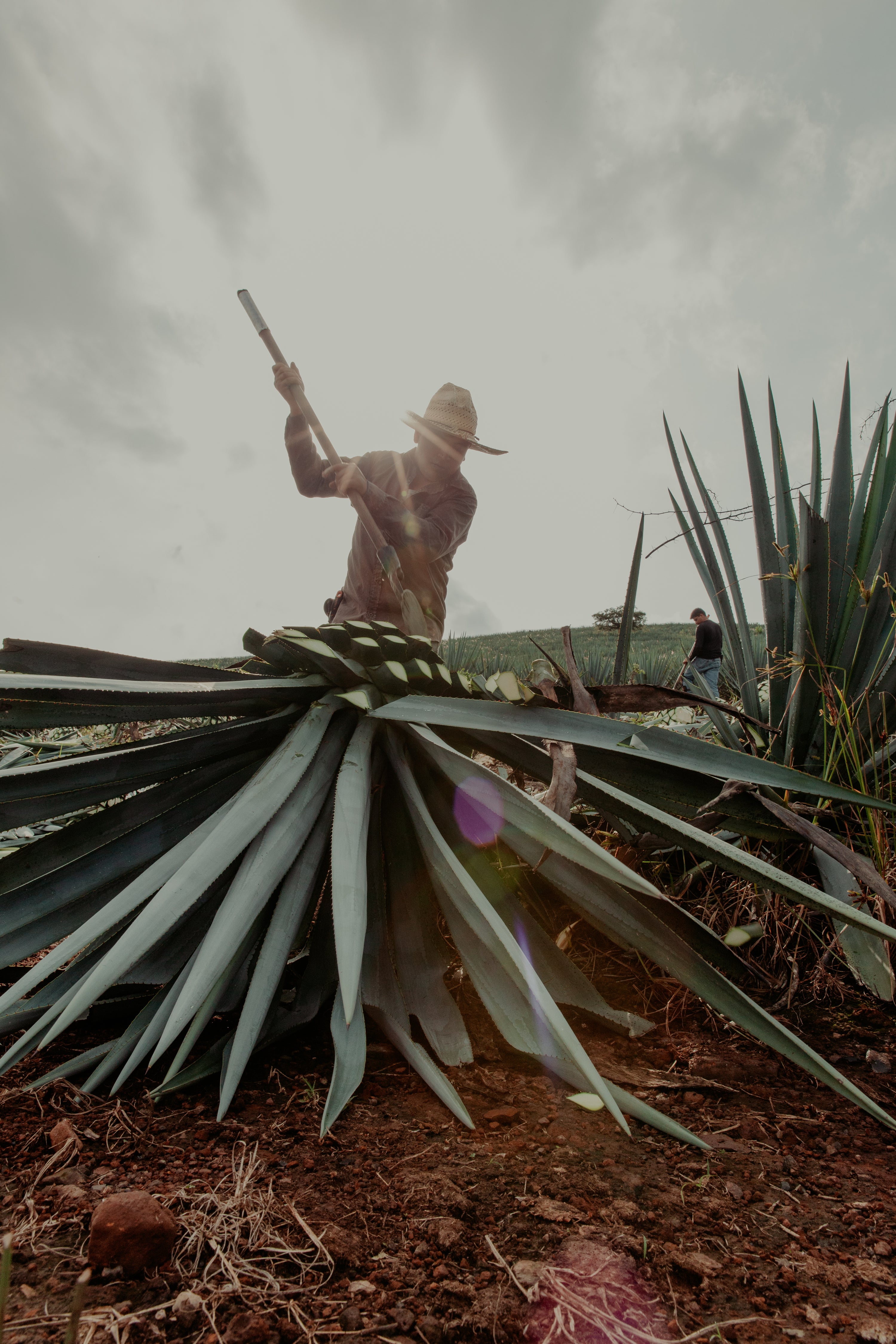
Una Vida Tequila prides itself on its comprehensive, 360-degree approach to tequila production, setting us apart in the industry. Unlike many others, we take full responsibility for managing the waste generated by our processes, ensuring minimal environmental impact. From the very beginning, we cultivate and harvest our own agave, carefully managing the entire planting process to avoid any harmful applications that could compromise the quality of our tequila or harm the environment.
To ensure the highest quality tequila, we combine our premium agave with a high-quality production process that prioritizes sustainability. Our distillery takes responsibility for the waste produced during tequila manufacturing and has developed a comprehensive treatment method by creating a dedicated company focused solely on waste management. This company processes the waste into organic fertilizers, both solid and liquid, that are then used to enrich our agave crops with essential nutrients, closing the loop and promoting a circular economy.
The water utilized in our tequila production, for both the process itself and the dilution, is sourced directly from our private aquifer. We hold all necessary permits from CONAGUA, the governmental secretary responsible for protecting national waters. Furthermore, we employ a specialized treatment and filtration system that adheres to all relevant regulations.



Your cart is currently empty.